

Beyond Smart Classrooms: Advancing Next-Generation Edu-Tech and Ethics Through STEAM at ICASE-2026
Examining digital responsibility, education’s future, and human-centered learning
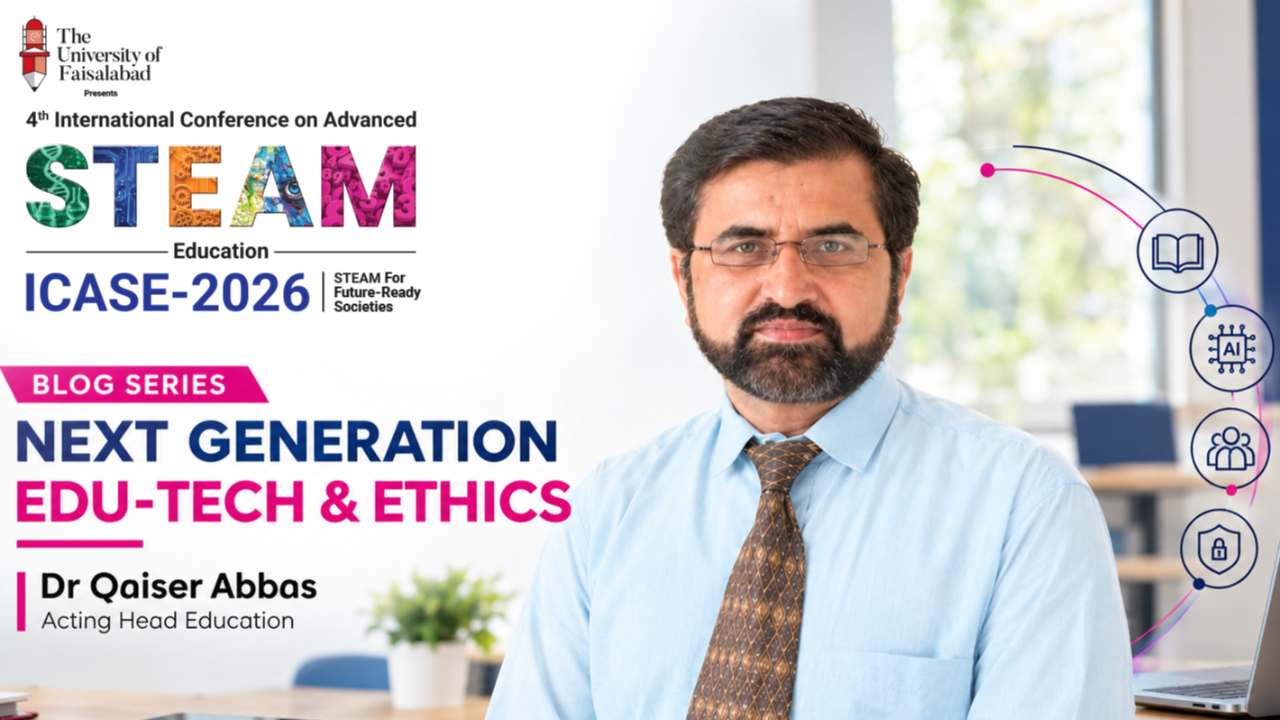
Future generations will think, learn, and manage an increasingly digital environment differently depending on how we respond to this topic. The discussion must move from what technology can do to how it should be created, used, and managed as educational institutions include increasingly complex technologies. The “Next Generation Edu-Tech & Ethics” program at the 4th International Conference on Advanced STEAM Education (ICASE-2026), which is being organized by The University of Faisalabad (TUF), revolves upon this convergence of innovation and ethical responsibility.
Classrooms Beyond Traditional Boundaries
Imagine a medical student honing a complicated clinical procedure in virtual reality before entering a hospital room, or an engineering student using dynamic simulation to assess the structural integrity of a bridge.
It indicates how the use of contemporary educational technology extends learning much beyond textbooks and traditional lecture rooms. New opportunities for visualization, practical experimentation, and individualized training are made possible by virtual and augmented reality, interactive simulations, and adaptive tutoring platforms. They provide teachers with effective methods to engage students with a variety of learning styles, make abstract topics clear, and assess students’ comprehension in real time.
For example, instead of only guiding students through a strict set of instructions, a virtual lab should enable students to autonomously examine scientific ideas and assess results. Only when technology keeps students actively involved in their thinking does it become significant.
Critical Questions for the Digital Era
It is now necessary to examine the ethical implications of digital platforms as they become an integral part of modern education.
Numerous learning systems gather detailed information on the conduct, involvement, and academic achievement of students. These insights create important issues about data privacy, informed consent, and responsible data governance, even though they can assist teachers in identifying areas in which a pupil is having difficulty.
Another issue with automated evaluation methods is how schools can guarantee that the algorithms used to grade student work continue to be impartial, transparent, and fair.
Bridging Technology and Ethics at ICASE-2026
- As colleges embrace new technologies, how can they maintain academic integrity?
- What guidelines ought to direct the creation of intelligent learning environments?
- How can we maintain educational innovation’s openness, accountability, and accessibility for all?
These are some of the important subjects that will be discussed during ICASE-2026’s “Next Generation Edu-Tech & Ethics” track. The conference, which is organized under the more general heading of “STEAM for Future-Ready Societies,” provides a global forum for educators, researchers, technologists, legislators, and business executives to work together on responsible innovation.
The goal of ICASE-2026, which is set for November 2–3, 2026, is to map out the future of educational settings through keynote addresses, technical presentations, interactive workshops, and panel discussions. The conference invites participants from all over the world to contribute to the development of the next generation of educational resources based on ethical principles through a hybrid format that permits both in-person and remote involvement.
Participate in the Discussion
Participate in the discussion at ICASE-2026 about the future of STEAM education, ethical innovation, and next-generation learning technologies.
Frequently Asked Questions
Next-generation educational technologies include artificial intelligence, virtual reality, augmented reality, adaptive learning platforms, and digital simulations that support interactive and personalized learning.
Ethical considerations help protect student privacy, maintain academic integrity, reduce algorithmic bias, and ensure that educational technologies are used fairly and responsibly.
STEAM education connects technological development with creative thinking, human-centered design, and ethical reasoning, encouraging learners to evaluate both the benefits and consequences of digital innovation.