

Advancing Equity, Inclusion and Well-being Through STEAM Education at ICASE-2026
Developing Educational Opportunities Where All Viewpoints Are Important
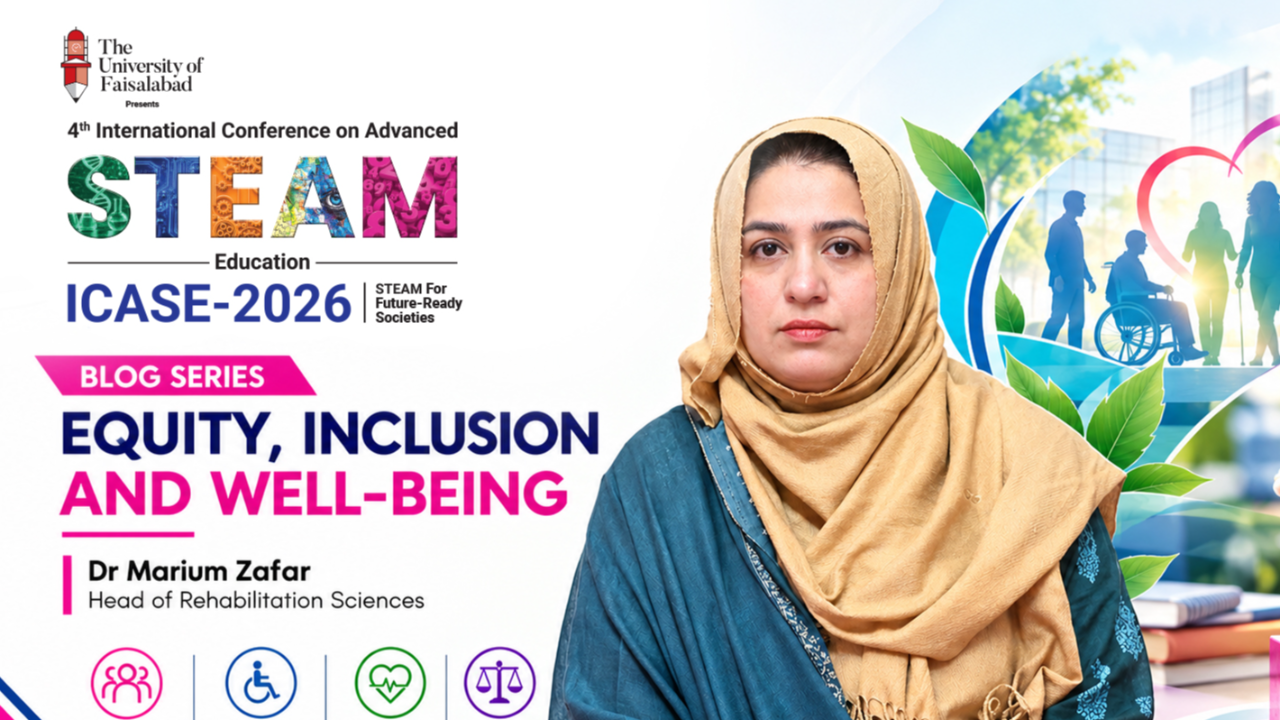
Although education has the capacity to change people's lives, real progress only occurs when all students have an equal chance to engage, contribute, and thrive. Every person should have access to high-quality education, encouraging learning environments, and chances for personal development, regardless of their gender, ability, financial status, or place of residence. Acknowledging this significant duty, “Equity, Inclusion and Well-Being” is one of the main themes of the 4th International Conference on Advanced STEAM Education (ICASE-2026) at The University of Faisalabad, which is part of the larger vision of “STEAM for Future-Ready Societies.”
Why Does This Theme Matter?
Academic achievement is not the only factor that determines success in today’s world. When students feel appreciated, respected, included, and encouraged, they perform at their highest level. People may fully offer their skills, ideas, and creativity when participation restrictions are eliminated. Fair access to opportunities is assured by equity. Everyone’s sense of belonging is assured by inclusion. Physical, mental, emotional, and social health are all supported by well-being. When combined, these ideas build healthier communities and more robust educational institutions.
Creating Inclusive Learning Environments
Every student has different experiences and viewpoints, and this is acknowledged in an inclusive learning environment. Diverse perspectives frequently result in better solutions and more significant innovation, whether in classrooms, labs, sports facilities, or community projects. By promoting interdisciplinary collaboration, STEAM education helps students learn from one another and acquire the skills necessary to address real-world problems. Educational institutions may assist every student in realizing their full potential by accepting diversity and encouraging involvement.
Leadership Perspective
Well-being, equity, and inclusiveness are essential to high-quality education. Students are more inclined to study, be creative, and make valuable contributions to society when they feel appreciated and supported. For communities to be prepared for the future, it is crucial to provide settings in which each person may engage and flourish.
Health, Rehabilitation, and Human Well-Being
The subject of equity, inclusion, and well-being also emphasizes the significance of life quality and health. Health equity, nutrition, rehabilitation, mental health, physical exercise, and social inclusion are just a few of the subjects covered by research presented at ICASE-2026. All members of society should have access to healthcare, rehabilitation services, and healthy lifestyles, according to these debates. Enhancing well-being is a social and educational obligation in addition to a health objective. In order to enable people to fully engage in school, work, sports, and communal life, rehabilitation is crucial. Increased independence, self-assurance, and a higher standard of living are all facilitated by inclusive rehabilitation.
Additionally, regular exercise enhances social connections, mental and physical health, and cognitive function. Increasing access to opportunities for physical activity can support more inclusive societies and lessen health inequities.
Looking Ahead
The importance of equity, inclusiveness, and well-being is growing as societies continue to change. When everyone has the chance to learn, engage, and reach their full potential, future-ready societies are built. ICASE-2026 gives educators, researchers, medical professionals, legislators, and students a forum to exchange ideas, investigate solutions, and improve cooperation around these crucial objectives. Society as a whole gains when everyone has the chance to thrive, contribute, and fit in.
Participate in the discussion about using STEAM education to create a more inclusive, equitable, and healthy future by attending ICASE-2026.
Frequently Asked Questions
STEAM education encourages varied learning approaches, collaborative activities, accessible technologies, and interdisciplinary participation to accommodate students with different abilities and educational needs.
Student well-being influences confidence, motivation, participation, and the ability to engage effectively in learning, research, and collaborative activities.
ICASE-2026 includes Equity, Inclusion and Well-being as a thematic area, encouraging discussions on accessible education, equitable learning opportunities, and supportive academic environments.