

Are Today’s Universities Preparing Tomorrow's Problem-Solvers? A STEAM Perspective from ICASE-2026
A degree may demonstrate academic achievement, but the ability to respond to unfamiliar challenges is what increasingly defines professional readiness. As industries and societies continue to change, universities face an important question: are students acquiring the skills they will actually need in the future?
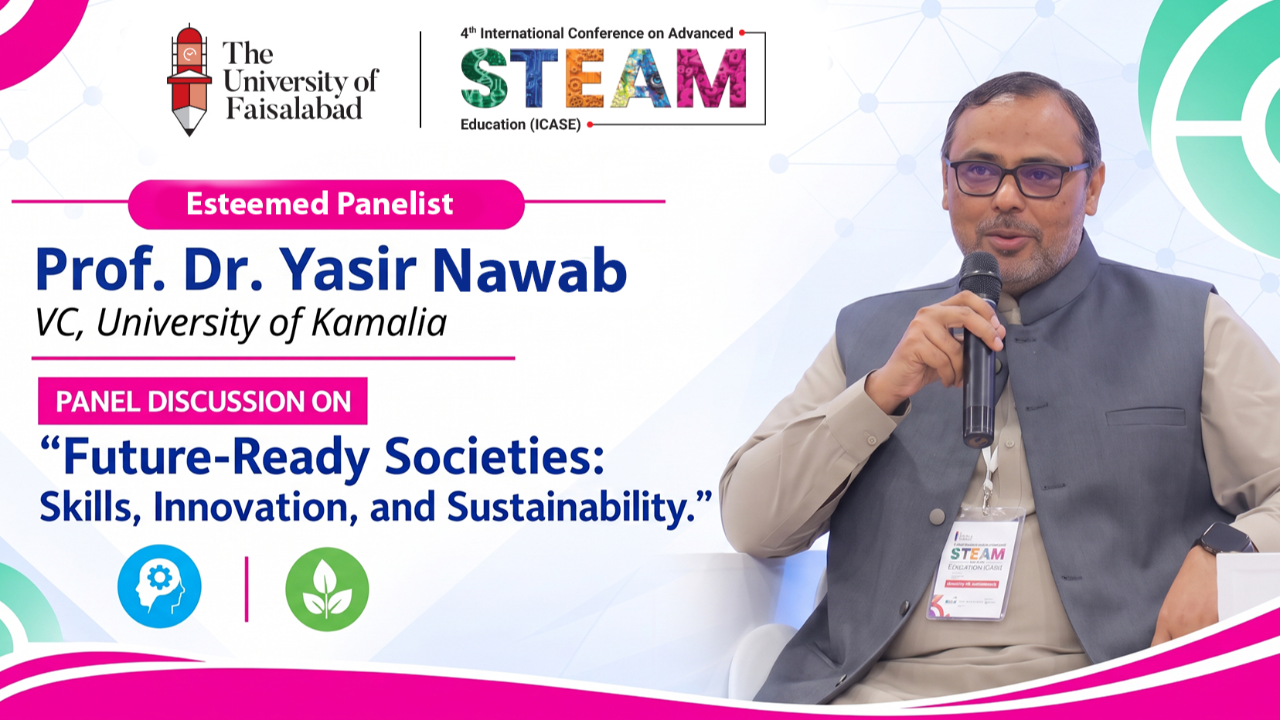
This question resonated with the central theme of the strategic panel discussion at the 4th International Conference on Advanced STEAM Education (ICASE-2026), where Prof Dr Yasir Nawab, Vice Chancellor of the University of Kamalia, joined national and international experts.
The discussion explored the importance of future-ready skills, innovation and interdisciplinary approaches to education. These priorities call for a shift in how learning outcomes are understood. Beyond subject-specific knowledge, students need opportunities to develop critical thinking, communication, collaboration, creativity and problem-solving abilities.
STEAM education offers a practical foundation for this transformation. By bringing different disciplines into conversation, it encourages students to examine challenges from multiple viewpoints and connect theoretical understanding with real-world applications.
For higher education institutions, this also raises the importance of reviewing curricula, learning environments and academic practices in response to emerging societal and professional needs.
The ICASE-2026 panel discussion contributed to this wider conversation, reinforcing the relevance of skills-based and interdisciplinary education in preparing individuals to participate meaningfully in tomorrow's society.